4 Natural Supplements to Boost Metabolism & Heart Health
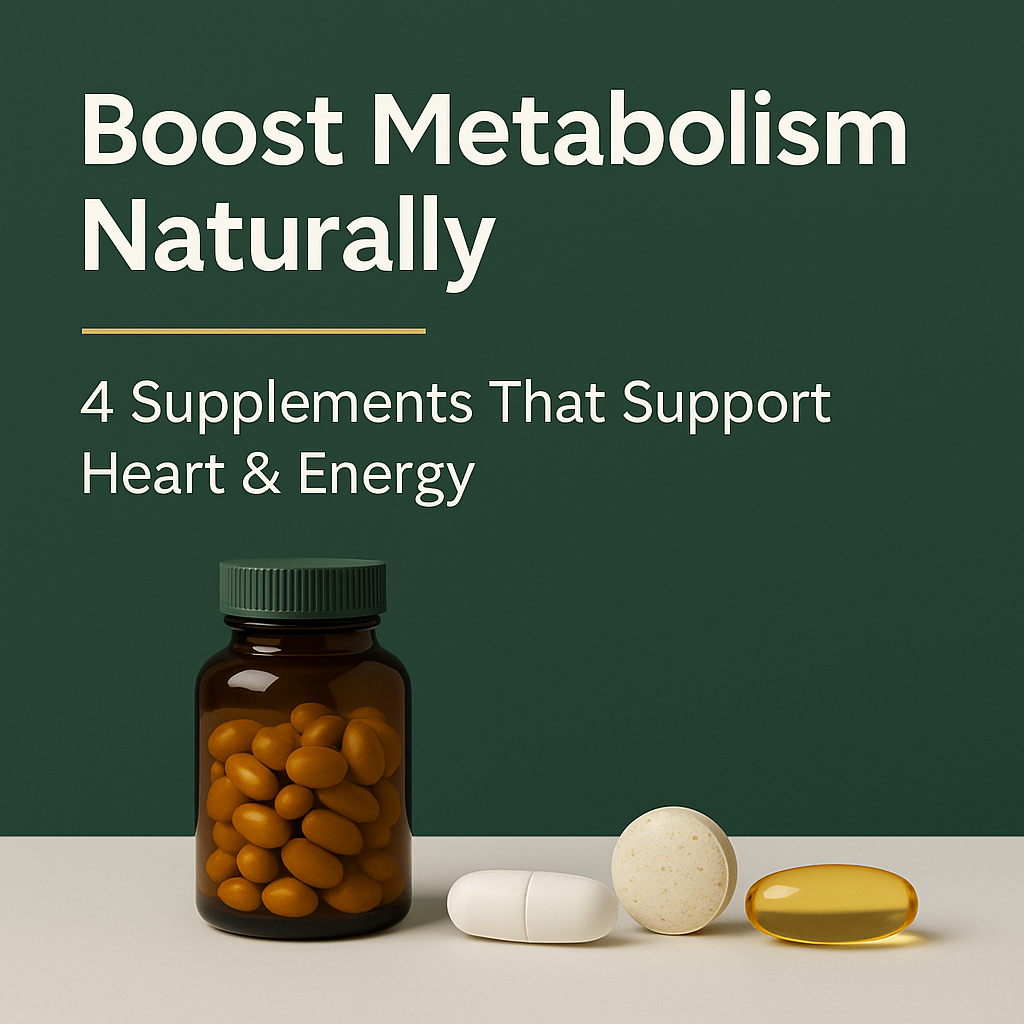
Modern lifestyles often slow metabolism and impact heart performance.
Science-backed natural supplements can help restore energy, balance cholesterol, and support long-term health.
Here are four of the most trusted supplements that support your metabolism and heart naturally.
🫖 1. Green Tea Extract (EGCG)
Green tea extract contains powerful antioxidants known as catechins, especially EGCG, which helps boost fat oxidation and cellular health.
It supports natural detoxification, steady energy, and overall metabolic balance.
🌻 2. Flaxseed Oil (ALA Omega-3)
Flaxseed oil is a vegan-friendly source of Omega-3 fatty acids, essential for heart and skin health.
Regular intake helps maintain cholesterol levels, improve digestion, and support smooth, glowing skin.
🌱 3. Organic Chia Seeds
Rich in fiber, protein, and plant-based Omega-3, chia seeds help support gut health and sustain energy throughout the day.
They’re an easy addition to smoothies, oatmeal, or salads for daily wellness.
🐟 4. Omega-3 Fish Oil
High-quality fish oil provides essential EPA and DHA, known for maintaining triglyceride balance and cardiovascular function.
It’s also beneficial for brain performance and inflammation control.
💚 Where to Find These Products
You can explore all four supplements here:
👉 Shop Recommended Supplements on Amazon
✅ Conclusion
Combining these natural supplements can improve your metabolism, heart health, and daily energy.
With consistent use and a balanced diet, you’ll strengthen your overall wellness naturally and sustainably.