7 Daily Micro-Habits That Reduce Stress and Improve Mental Clarity (Backed by Psychology & Neuroscience)
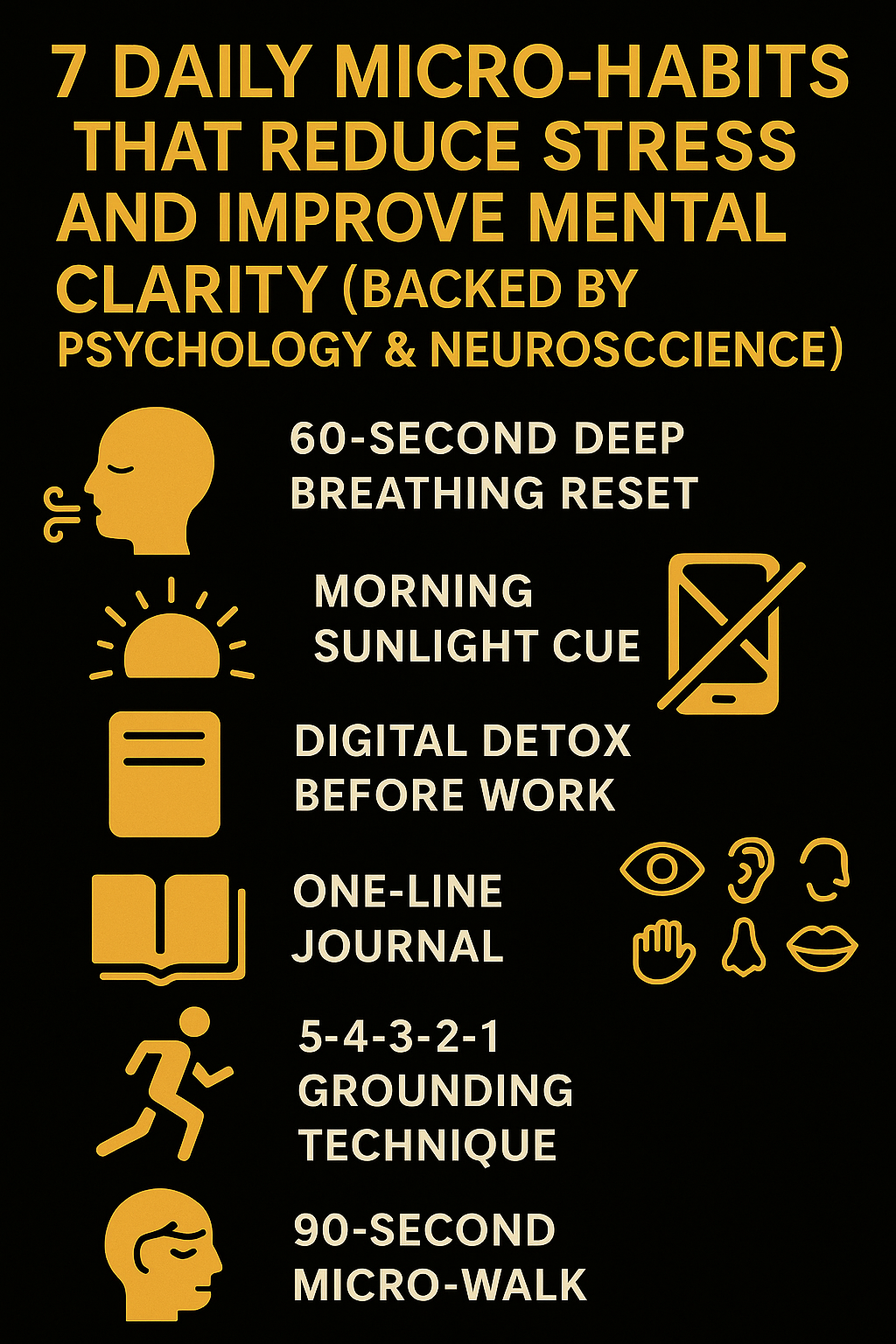
Stress isn’t just an emotional burden—it quietly disrupts sleep, focus, metabolism, and long-term health. But reducing stress doesn’t always require major lifestyle changes. Research from psychology and neuroscience shows that small, repeatable micro-habits can meaningfully lower cortisol, enhance mental clarity, and strengthen emotional resilience over time. These seven micro-habits take less than five minutes each but create outsized benefits when practiced daily. — 1. The 60-Second Deep Breathing Reset A single minute of slow diaphragmatic breathing activates the vagus nerve and signals the body to shift out of fight-or-flight response. How to do it: Inhale for 4 seconds, exhale for 6 seconds. Repeat for one minute. Why it works: Longer exhalations lower heart rate and cortisol. — 2. A Morning “Sunlight Cue” for Your Brain Exposure to natural light in the first hour of the day calibrates your circadian rhythm and improves neurotransmitter balance—especially serotonin. Benefits: Better mood, improved focus, and deeper sleep at night. Time required: 2 minutes near a window or walking outside. — 3. A Two-Minute Digital Detox Before Work Your nervous system reacts instantly to notifications. A brief pre-work digital pause reduces cognitive overload. What to do: Silence notifications, clean your workspace, breathe. Effect: A mental “buffer zone” that reduces anxiety and boosts clarity. — 4. The “One-Line Journal” Habit Journaling doesn’t have to be long. Writing one sentence about your state of mind helps your prefrontal cortex regulate emotional processing. Example: “Today I choose to respond calmly, not react impulsively.” Impact: Lower stress, improved decision-making. — 5. The 5-4-3-2-1 Grounding Technique A quick mindfulness practice used by therapists to reduce anxiety. How it works: 5 things you can see 4 things you can touch 3 things you can hear 2 things you can smell 1 thing you can taste Why it works: Pulls the brain out of rumination and into the present moment. — 6. The 90-Second Micro-Walk Even a short walk increases oxygen flow, improves memory recall, and reduces cortisol. Tip: Walk to the mailbox, down the hall, or around your home—speed doesn’t matter. Neuroscience link: Movement activates brain regions tied to calmness and problem-solving. — 7. A 30-Second Evening Wind-Down Ritual A consistent evening signal helps your brain understand it's time to shift into rest mode. Ideas: Dim lights, stretch your neck, drink water, or place your phone across the room. Effect: Better sleep quality and reduced next-day anxiety. — Why Micro-Habits Work Better Than Big Lifestyle Changes Most people don’t stick to complicated wellness routines. Micro-habits succeed because they: Require almost no willpower Fit into any schedule Build momentum through tiny wins Rewire the brain through repetition Over time, these small actions compound, creating lower stress, sharper focus, and a calmer emotional baseline. — Final Thoughts You don’t need an hour-long routine to improve your mental health. With just a few minutes a day, these micro-habits create powerful physiological and psychological shifts. Start with one or two, repeat them consistently, and allow the benefits to build naturally.