Heart-Healthy Eating: How to Build a Better Plate at Every Meal
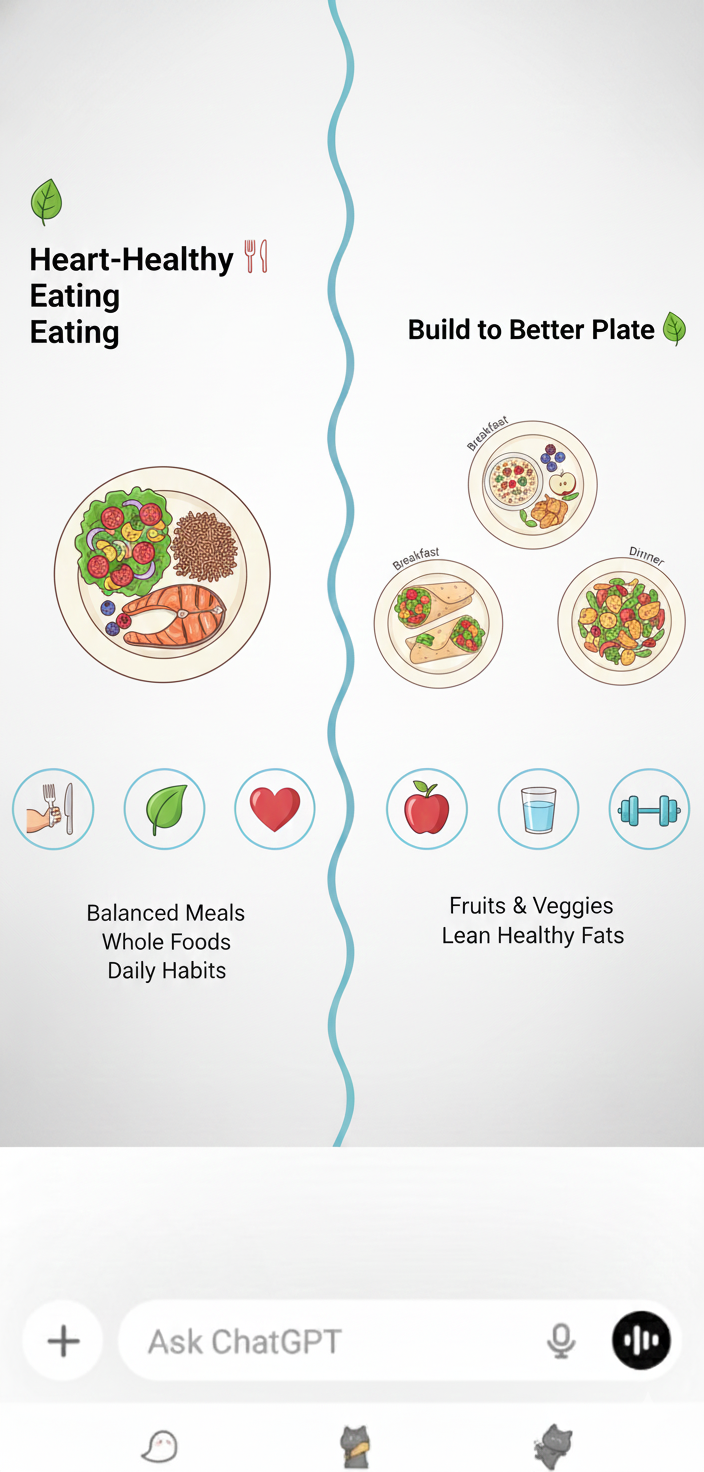
Heart disease doesn’t develop overnight. It’s the result of years of small choices: what you cook with, how often you rely on takeout, how much fiber you get, how much added sugar slips into your day. The good news is the same rule works in reverse. You don’t need a perfect diet or expensive “heart detox.” You just need a pattern that, most of the time, makes life easier on your arteries, blood pressure, and cholesterol. This guide shows you how to build a heart-healthy plate at every meal using simple structures you can repeat, not strict meal plans you’ll abandon in a week. — What Does “Heart-Healthy Eating” Actually Mean? Forget magic foods. Heart-healthy eating is a pattern built from a few core ideas: 1. More plants – vegetables, fruits, beans, whole grains, nuts, seeds. 2. Better fats – olive oil, nuts, seeds, and fish instead of butter, lard, and processed meats. 3. Higher fiber – especially from whole grains, beans, and vegetables. 4. Less added sugar and ultra-processed food – fewer sugary drinks, candies, pastries, and instant meals. 5. Smart sodium – less salt from processed foods, more flavor from herbs, spices, and citrus. Different “diets” (Mediterranean, DASH, plant-predominant patterns) are just variations on this theme. — The Heart-Healthy Plate: A Simple Visual Rule Instead of counting every gram, use a plate model you can apply to most meals. Step 1: Fill Half Your Plate with Vegetables (and Some Fruit) Aim for about 50% of your plate to be: Leafy greens (spinach, kale, romaine, arugula) Colorful veg (tomatoes, peppers, carrots, broccoli, cauliflower, zucchini) Non-starchy veg in soups, stir-fries, or salads Fruit fits too, especially as a side or dessert: Berries, apples, oranges, pears, kiwi, grapes Why it helps your heart: Adds fiber that improves cholesterol and blood sugar Provides potassium and antioxidants that support blood pressure and vascular health Naturally lowers the space available for ultra-processed extras — Step 2: Reserve a Quarter of the Plate for Protein Choose heart-friendly proteins most of the time: Beans and lentils Chickpeas and soy foods (tofu, tempeh, edamame) Fish (especially salmon, sardines, mackerel, trout) Skinless poultry Eggs in moderate amounts Limit: Processed meats (sausages, bacon, hot dogs, deli meats) Large, frequent portions of fatty red meat Why it helps your heart: Supports muscle and metabolism Helps you feel full, so you’re less likely to overdo refined carbs and sweets Plant proteins and fish come with extra heart benefits (fiber, omega-3, fewer saturated fats) — Step 3: Use the Last Quarter for Whole Grains or Starchy Vegetables Fill about 25% of your plate with: Brown rice, quinoa, barley, bulgur Whole-grain bread, whole-grain pasta Oats Potatoes or sweet potatoes (especially with skin) Limit: White bread and pastries Instant noodles and white rice as the default every meal Giant portions of fries and other fried starches Why it helps your heart: Whole grains provide more fiber, vitamins, and minerals They lead to steadier blood sugar and more stable energy They make it easier to maintain a healthy weight, which lowers blood pressure and improves cholesterol — Step 4: Add a Small Portion of Healthy Fats Healthy fats don’t need to take up their own quadrant, but they should show up on the plate: Extra-virgin olive oil (for dressings, roasting, or finishing dishes) A small handful of nuts or seeds Avocado slices Fatty fish (counted as both protein and healthy fat) Limit: Butter, ghee, lard as main cooking fats Large amounts of coconut or palm oil Deep-fried foods Why it helps your heart: Unsaturated fats improve LDL/HDL balance They support anti-inflammatory pathways They make meals satisfying, so you don’t go looking for sugary snacks an hour later — Breakfast, Lunch, and Dinner: Heart-Healthy Templates You don’t need dozens of recipes. Start with templates and plug in the foods you like. Heart-Healthy Breakfast Ideas Use this formula: whole grain + protein + fruit + optional healthy fat Examples: Oats cooked with milk or a milk alternative, topped with berries, banana slices, and a spoonful of nuts or seeds. Whole-grain toast with avocado and a boiled egg, plus a piece of fruit. Plain yogurt with mixed fruit, a drizzle of honey, and some ground flaxseed or chia. Watch out for: Sugary breakfast cereals Sweet pastries and donuts Flavored coffees loaded with sugar and cream — Heart-Healthy Lunch Ideas Use this formula: half plate vegetables + protein + whole grain Examples: Big salad with mixed greens, chickpeas or lentils, cucumbers, tomatoes, and a dressing of olive oil + lemon + herbs. Serve with a slice of whole-grain bread. Grain bowl with brown rice or quinoa, roasted vegetables, grilled chicken or tofu, and a drizzle of tahini or olive oil. Vegetable-rich soup (tomato, lentil, minestrone) plus a side salad and whole-grain toast. Watch out for: Fast food combos (fried chicken, fries, sugary drinks) Processed meat sandwiches on white bread with sugary sauces “Healthy-looking” café dishes that are mainly refined starch + creamy sauce — Heart-Healthy Dinner Ideas Use the same plate model: ½ vegetables, ¼ protein, ¼ whole grain or starchy veg, plus healthy fat Examples: Baked salmon with herbs and olive oil, roasted broccoli, and a side of barley or quinoa. Stir-fry with lots of vegetables, tofu or thinly sliced chicken, a small portion of brown rice, and a light sauce (less sugar, less salt). Bean chili with tomatoes and vegetables, served over a small scoop of brown rice or a baked potato, topped with a spoonful of plain yogurt instead of sour cream. Watch out for: Heavy cream-based sauces Large portions of red meat with no vegetables Takeaway meals that combine lots of salt, sugar, and saturated fat — Smart Shopping and Label Tricks for Your Heart You make heart decisions in the store long before the food hits your plate. 1. Shop the “base foods” first Fill your cart with: Fresh or frozen vegetables and fruits (no sugary syrups or heavy sauces) Whole grains (oats, brown rice, quinoa, whole-grain bread) Beans (canned or dried), lentils, chickpeas Plain yogurt, milk or fortified alternatives Nuts and seeds Fish, eggs, and minimally processed poultry When your home is stocked with base ingredients, heart-healthy meals become the default, not the exception. — 2. Read labels without overthinking For packaged foods you eat often (cereal, bread, yogurt, snacks), check: Fiber: Aim higher. More fiber per serving is generally better. Added sugar: Keep this low in everyday foods. Save higher sugar for intentional treats. Sodium: Choose lower-sodium options, especially for soups, sauces, and ready meals. Ingredients list: Shorter is usually better. Watch for multiple sugars, refined flours, and lots of additives. You don’t need to hit perfection. Just nudge each product you buy in a better direction than your old default. — Common Questions About Heart-Healthy Eating 1. Do I need to cut out all red meat and cheese? Not necessarily. For many people, heart-healthy eating means less frequent and smaller portions of red meat and full-fat dairy, not zero. You can shift toward more fish, beans, and poultry while still enjoying occasional red meat or cheese within an overall balanced pattern. — 2. Is a fully vegan diet the best for heart health? Plant-based diets can be very heart-friendly, especially when they emphasize whole foods. But you don’t have to be 100% vegan to help your heart. A plant-predominant pattern (plants at the center, with modest amounts of fish, eggs, or yogurt if you like them) already provides major benefits. — 3. What about low-carb or keto diets for heart health? Some people see short-term improvements in weight and blood sugar on low-carb plans, but long-term heart impact depends on what replaces the carbs. Low-carb patterns built around vegetables, nuts, olive oil, and fish are very different from ones built around processed meats and butter. Quality matters more than the exact carb number. — 4. Can I still eat dessert? Yes, just not all the time and not in giant portions. Try to make sweets intentional treats, not background noise at every meal. Having a small dessert a few times a week within a heart-healthy pattern is very different from daily sugary drinks and pastries. — 5. How long until my heart benefits from eating better? Some changes, like lower blood pressure and improved triglycerides, can show up in weeks. Cholesterol and weight shifts may take months. The real power is in consistency: the more your everyday pattern supports your heart, the less room there is for slow, silent damage to build up. — Final Thoughts Heart-healthy eating isn’t about memorizing lists of “good” and “bad” foods. It’s about repeating a simple structure: Half the plate vegetables (and some fruit) A palm-sized portion of quality protein A fist-sized portion of whole grains or starchy vegetables A small amount of healthy fat Minimal added sugar and ultra-processed extras Do that most of the time, and your heart quietly works in a friendlier environment every single day — not because you follow a perfect plan, but because your default plate is finally on your side.