How Added Sugar Affects Your Heart (and How to Cut Back Without Feeling Deprived)
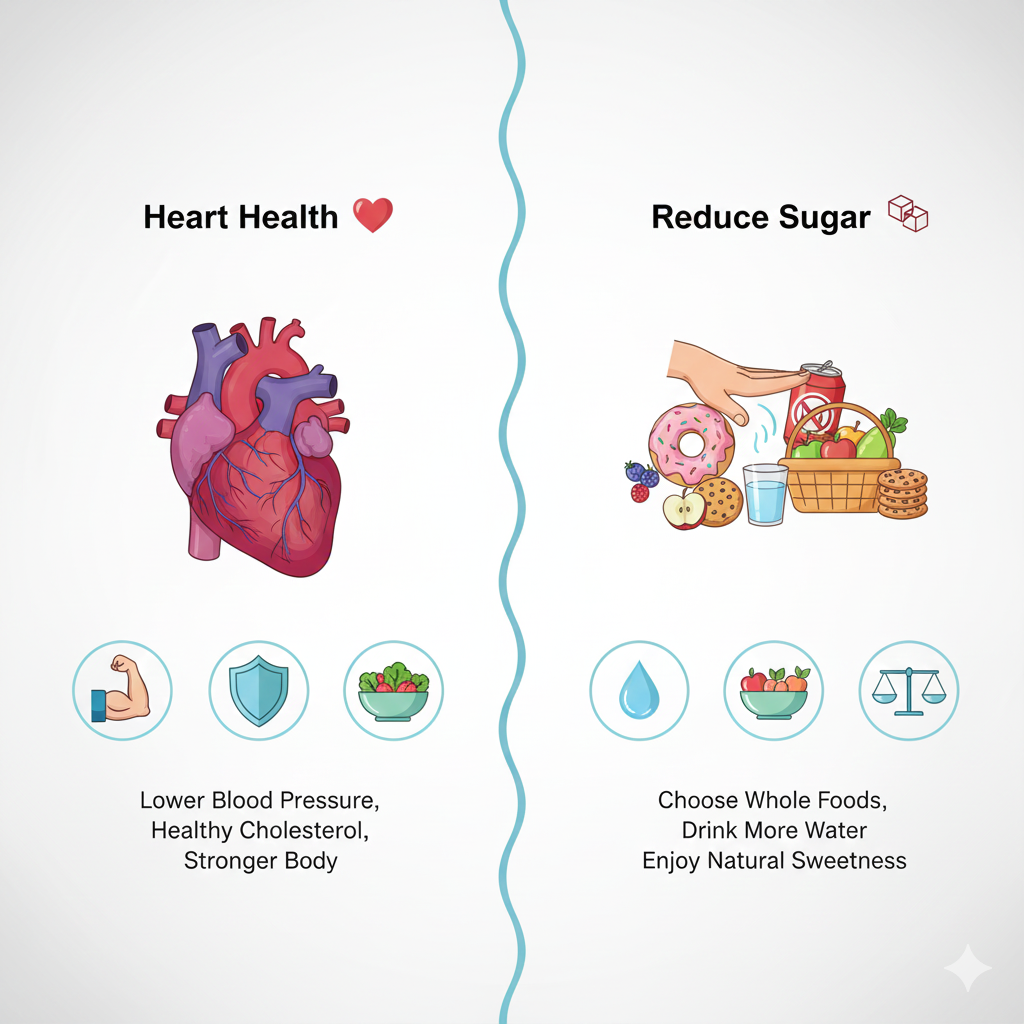
Most people think of sugar as a weight or diabetes issue. In reality, added sugar is also a powerful heart-health issue. Large studies show that people who eat a high proportion of their calories from added sugar have a significantly higher risk of dying from cardiovascular disease, even after accounting for weight and other risk factors. The goal of this guide is not to demonize every sweet bite, but to explain: How added sugar affects your heart and blood vessels How much is considered “too much” Simple, sustainable ways to cut back without feeling punished — Added Sugar vs. Natural Sugar: What’s the Difference? When experts talk about “added sugar,” they mean sugar that is added during processing or preparation, not the sugar naturally found in whole fruits, vegetables, and plain dairy. Examples of added sugars: Table sugar (sucrose) High-fructose corn syrup Honey, syrups, and agave nectar Sugar added to soft drinks, energy drinks, flavored coffees, cakes, cookies, candy, and many sauces Whole fruits and plain milk do contain natural sugars, but they come packaged with fiber, water, and nutrients that slow absorption and increase fullness. That makes them behave very differently in your body compared with soda or candy. — How Much Sugar Is Too Much? Global and national organizations have issued fairly consistent guidelines. The World Health Organization (WHO) recommends reducing “free sugars” (all added sugars plus those naturally present in honey, syrups, and fruit juices) to less than 10% of daily energy intake, and suggests that going below 5% (around 25 g or 6 teaspoons per day for an adult) may provide additional health benefits. The American Heart Association (AHA) recommends that: Most women limit added sugar to 6 teaspoons (about 25 g) per day Most men limit added sugar to 9 teaspoons (about 36 g) per day Many people easily exceed these amounts with a few sweetened drinks or snacks — often without realizing it. — How Added Sugar Affects Your Heart Added sugar doesn’t attack the heart directly; it reshapes your metabolism in ways that strain your cardiovascular system over time. 1. Raises Triglycerides and Promotes Fatty Liver Sugary drinks and foods, especially those high in fructose (like many soft drinks and sweets), are rapidly absorbed and processed in the liver. Excess intake can: Increase triglycerides (a type of blood fat linked to heart disease) Promote fat buildup in the liver (nonalcoholic fatty liver disease), which is associated with insulin resistance and higher cardiovascular risk High triglycerides plus LDL cholesterol is a particularly risky combination for arteries. — 2. Increases Blood Pressure and Inflammation Consuming a lot of added sugar — especially sugary beverages — can: Raise blood pressure Increase chronic low-grade inflammation Both are key pathways to atherosclerosis (plaque buildup in arteries) and heart disease. Even when weight is held constant, some studies suggest that high-sugar diets can raise blood pressure, likely via effects on the kidneys, nervous system, and blood vessel function. — 3. Contributes to Weight Gain and Central Obesity Liquid calories from sugary drinks are particularly sneaky: They don’t trigger fullness signals as well as solid food. People often don’t compensate by eating less later. Over time, this can lead to excess calorie intake, weight gain, and increased abdominal fat — a pattern closely linked with insulin resistance, high blood pressure, and high triglycerides. — 4. Raises Long-Term Cardiovascular Risk Put together, these effects add up. Studies in large populations show: Higher added sugar intake (especially when it exceeds ~15–20% of daily calories) is associated with a significantly higher risk of cardiovascular disease and cardiovascular mortality. Regular consumption of sugar-sweetened beverages is linked with increased risk of heart disease, stroke, and cardiometabolic death, particularly in middle-aged adults. The bottom line: a consistently high-sugar lifestyle accelerates the conditions that set you up for heart problems later. — Where Is All the Sugar Coming From? For most people, the biggest contributors are: Soft drinks, energy drinks, sweetened iced teas Flavored coffees and coffee-shop drinks Sweetened breakfast cereals and granola Cakes, cookies, pastries, donuts Candy and chocolate Sweetened yogurt and flavored milk Ketchup, barbecue sauce, sweet chili sauce, and other condiments Because sugar hides under many names (sucrose, glucose, fructose, maltose, corn syrup, rice syrup, etc.), ingredients lists can be misleading. A rule of thumb: if several forms of sugar appear in the first few ingredients, it’s a high-sugar product. — A Heart-Healthier Approach to Sugar: Practical Strategies You don’t have to quit sugar forever. The goal is to move away from chronic excess, especially from sugary drinks and ultra-processed sweets. 1. Target Sugary Drinks First Cutting sugary drinks is one of the fastest ways to reduce added sugar and improve heart risk. Try: Water (still or sparkling) with lemon, lime, or berries Unsweetened tea or coffee Diluting fruit juice with water, then gradually using less juice Even replacing one sugary drink per day with a no-sugar option can make a measurable difference over time. — 2. Use “Sweetness Slots” Instead of mindlessly spreading sugar across the whole day: Decide where sweetness matters most to you (for example, one dessert after dinner or a sweet coffee in the morning). Keep the rest of the day mostly low-sugar. This keeps you in control rather than letting sugar show up everywhere. — 3. Upgrade, Don’t Just Remove If you simply delete sugar, you’ll feel deprived. Swap instead: Replace sugary breakfast cereal with oats topped with fruit and nuts. Trade cookies or pastries for yogurt with berries and a drizzle of honey. Swap candy for fresh fruit or a small piece of dark chocolate. You still get pleasure, but with more fiber, nutrients, and better blood-sugar responses. — 4. Learn to Read Labels Efficiently When scanning a package: Check “Added sugars” on the Nutrition Facts panel. Aim to keep most routine foods (yogurt, cereal, sauces) on the lower end of added sugars. Reserve high-sugar items for true treats, not daily staples. Small label-based choices, repeated often, matter more than rare “perfect” choices. — 5. Balance Sweetness with Protein, Fiber, and Fat If you do eat something sweet, pairing it with protein, fiber, or healthy fat can: Slow digestion Flatten blood sugar spikes Improve satiety Examples: Fruit + nuts Whole-grain toast with peanut butter and sliced banana Greek yogurt with berries and seeds This doesn’t cancel all the sugar, but it makes the experience metabolically gentler. — What About Artificial Sweeteners? Research on artificial and low-calorie sweeteners is mixed and evolving: They can help some people cut soda or sugar intake in the short term. Some observational studies raise questions about long-term metabolic or cardiovascular effects, while others find neutral results. Practical approach: Use them, if needed, as a transition tool rather than a license to drink unlimited sweet beverages. Continue moving toward mostly water, unsweetened tea/coffee, and minimally sweet foods. — FAQ: Sugar and Heart Health 1. Is fruit bad for your heart because it has sugar? Whole fruit is generally beneficial for heart health. It comes with fiber, water, and phytonutrients that slow sugar absorption and support vascular health. The problem is usually added sugar, not the natural sugar in whole fruits. 2. Are “natural” sweeteners like honey or coconut sugar healthier? They may contain trace minerals or a slightly lower glycemic index, but from a calorie and added-sugar perspective, your body handles them similarly to table sugar. Treat them as added sugars rather than health foods. 3. Do I need to count every gram of sugar? Not necessarily. Many people do better with simple rules: Avoid sugary drinks most of the time Keep desserts and sweets as occasional treats Choose mostly whole, minimally processed foods If you enjoy tracking, you can compare your total added sugar to the WHO or AHA guidelines, but it’s not required. 4. How quickly will my heart risk drop if I cut back on sugar? Some things change quickly: triglycerides, blood pressure, and fasting blood sugar can improve within weeks of reducing sugary drinks and excess calories. Long-term risk reduction accumulates over months to years of steady habits. 5. What’s a realistic first step? For many people, the single most powerful step is: remove or drastically reduce sugary beverages, then gradually reduce other obvious sources like sweets and pastries. — Final Thoughts Sugar itself is not evil, but our modern food environment makes it too easy to consume too much, too often, especially in liquid and ultra-processed forms. By understanding how added sugar affects your heart — raising triglycerides, increasing blood pressure and inflammation, and promoting weight gain — you can make calmer, more strategic choices instead of reacting to fear-based headlines. Focus on: Water and unsweetened drinks as your default Whole, minimally processed meals Occasional, intentional sweets rather than constant background sugar These changes don’t just shrink a number on a lab report; they reshape the conditions that determine how your heart and blood vessels age over time.