How Sunlight Exposure Affects Your Mood and Energy Levels
Meta Description
Discover how daily sunlight exposure supports your mood, sleep quality, and energy levels through serotonin and circadian rhythm regulation.
☀️ Why Sunlight Matters for Your Body and Mind
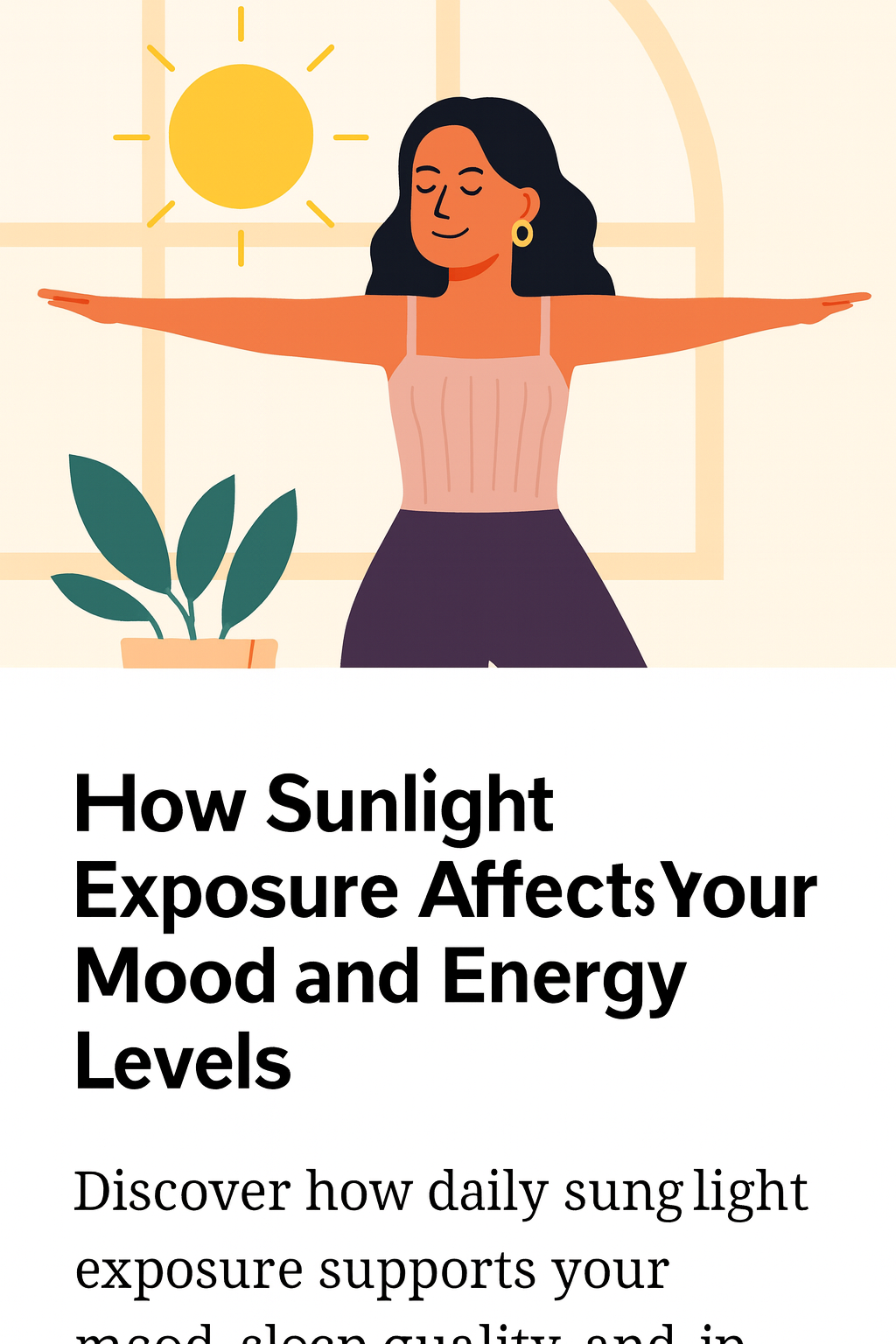
Sunlight is more than just a source of warmth — it’s a biological signal that sets your body’s internal clock.
When sunlight enters your eyes in the morning, it triggers a chain reaction in your suprachiasmatic nucleus (SCN) — the brain’s “master clock.”
This process regulates your circadian rhythm, influencing everything from hormone release to sleep timing.
According to the National Institutes of Health (NIH, 2023), people who receive at least 20 minutes of morning sunlight have more stable serotonin levels and reduced symptoms of fatigue and depression.
Serotonin, sometimes called the “happy chemical,” increases feelings of well-being and focus during the day.
🌅 The Connection Between Sunlight and Sleep
A consistent dose of sunlight early in the day also enhances melatonin regulation at night.
A 2022 study published in Sleep Medicine Reviews found that adults exposed to morning sunlight fell asleep 30% faster and reported better sleep efficiency than those who stayed indoors.
When you don’t get enough light exposure, your body’s natural cues become disrupted, leading to insomnia, brain fog, and even slower metabolism.
🔆 How to Maximize the Benefits of Sunlight
You don’t need to sunbathe for hours — balance is key.
Here are practical steps backed by clinical research:
| Time of Day | Recommended Exposure | Main Benefit |
|---|---|---|
| Morning (7–9 AM) | 15–20 min outdoor walk | Boost serotonin, align circadian rhythm |
| Noon (11 AM–1 PM) | 5–10 min light exposure | Vitamin D synthesis |
| Afternoon | Open blinds, work near window | Maintain alertness and focus |
Note: Avoid direct midday exposure longer than 20 minutes without protection — the American Dermatological Association (ADA, 2022) recommends broad-spectrum SPF 30 sunscreen to prevent UV damage.
🌻 Simple Daily Routine to Feel More Awake
- Start your morning outdoors — open your window or walk outside within 30 minutes after waking.
- Keep your workspace bright — natural or full-spectrum light maintains alertness.
- Dim lights after sunset — allow your brain to prepare for melatonin release.
Within a week, most people notice:
- Less afternoon fatigue
- Better mood stability
- Improved sleep quality
✅ Key Takeaway
Sunlight exposure isn’t just about Vitamin D — it’s a free, natural antidepressant and energy regulator.
Even short, consistent exposure can reshape your sleep patterns and mental clarity.
FAQ
Q: Can sunlight really replace antidepressant medication?
A: No. While sunlight helps regulate serotonin, it is not a medical treatment. It can complement therapy but not replace it.
Q: What if I live in an area with limited sunlight?
A: Use light therapy lamps (10,000 lux) during winter; they replicate morning sunlight and support circadian rhythm.