How to Build a Gut-Friendly High-Fiber Breakfast That Keeps You Full All Morning
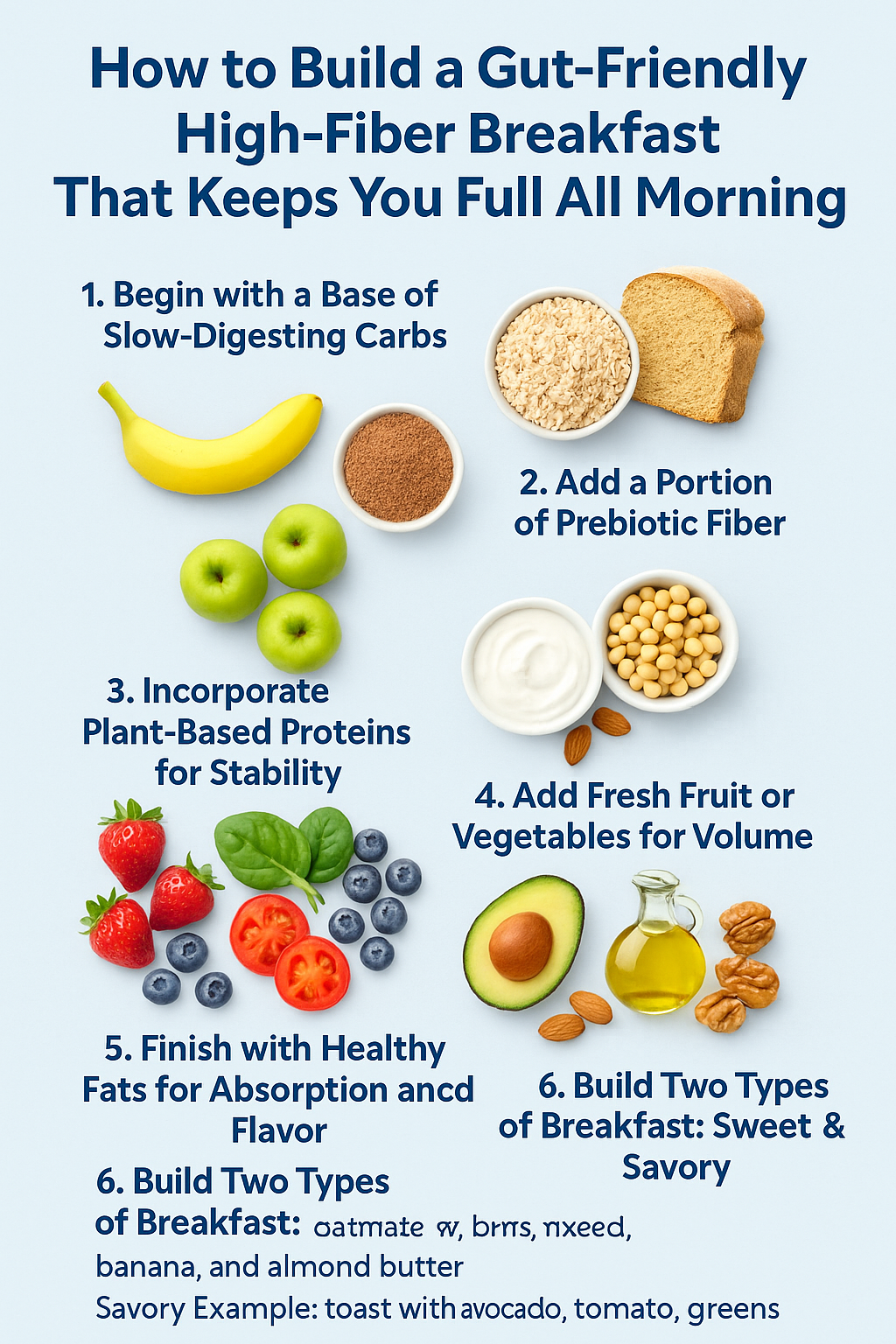
A healthy day often starts with the first meal. Breakfast sets the tone for energy levels, hunger patterns, mood stability, and digestion. Yet many people unknowingly begin their morning with low-fiber, high-sugar options—pastries, sweetened coffee drinks, refined cereals, or white-bread sandwiches. These choices digest quickly, spike blood sugar, and bring on the familiar “crash” by mid-morning. In contrast, a high-fiber breakfast supports steadier energy, stronger digestive health, and longer-lasting fullness. Dietary fiber feeds the gut microbiome, slows digestion, balances blood sugar, and improves long-term metabolic health. According to a 2022 review published in Nutrients, adults who consume at least 25 grams of fiber daily report better digestion, lower appetite throughout the day, and improved mood stability. Starting the morning with fiber is one of the easiest ways to move toward that target. But “eat more fiber” is vague advice. The key is to build a balanced breakfast that combines different fiber types—soluble, insoluble, and prebiotic—so your gut receives a variety of fuels. Below is a simple, science-guided framework anyone can use to create a gut-friendly, high-fiber breakfast without relying on packaged or processed foods. — 1. Begin with a Base of Slow-Digesting Carbs High-fiber breakfasts don’t mean avoiding carbohydrates. The goal is to choose carbohydrates that digest slowly and contain both soluble and insoluble fiber. These help stabilize blood sugar and keep you full longer. Good foundational bases include: • rolled oats or steel-cut oats • whole-grain toast or rye bread • barley, buckwheat, or quinoa porridge • bran-based cereals with minimal added sugar These foods release energy steadily and help prevent the energy dip that often leads people to grab extra snacks by 10 a.m. A 2021 Journal of Nutrition study found that fiber-rich grains significantly improve satiety compared to refined grains, even when the calorie content is similar. — 2. Add a Portion of Prebiotic Fiber Not all fiber works in the same way. Prebiotic fiber specifically feeds beneficial gut bacteria, helping them produce short-chain fatty acids that support digestion, immune function, and even mood regulation. Prebiotic-rich choices include: • bananas (slightly green have more prebiotics) • cooked and cooled oats or quinoa • chicory root–rich foods • onions or leeks (great in savory breakfasts) • apples and pears • ground flaxseed Adding one source of prebiotic fiber enhances the gut-friendly profile of the entire meal. Even small shifts—like adding a tablespoon of ground flaxseed to oatmeal—can meaningfully increase satiety and digestive comfort. — 3. Incorporate Plant-Based Proteins for Stability Protein slows digestion, reduces cravings, and helps support muscle repair and immune function. Combining fiber with protein creates a breakfast that digests steadily and keeps hunger in check for hours. Reliable plant-based protein options include: • Greek-style yogurt alternatives • tofu scramble • nuts and seeds • nut butter • legumes such as chickpeas (in savory bowls) When protein and fiber appear together, blood sugar rises more slowly. A 2020 meta-analysis in The American Journal of Clinical Nutrition found that high-fiber, moderate-protein breakfasts improve concentration and reduce appetite more effectively than low-fiber meals, even in people with high stress levels or demanding morning routines. — 4. Add Fresh Fruit or Vegetables for Volume Fiber works best when combined with water-rich ingredients. Fruits and vegetables increase breakfast volume without significantly increasing calories. This helps stretch the stomach gently, triggering satiety hormones that tell the brain you’ve eaten enough. Great gut-friendly add-ins include: • berries (excellent antioxidant and fiber profile) • sliced apples or pears • spinach, kale, or mixed greens • tomatoes or cucumbers in savory bowls • grated carrots or zucchini in oatmeal Color variety often indicates nutrient diversity. Mixing two or more colors adds antioxidants that support gut lining health. — 5. Finish with Healthy Fats for Absorption and Flavor Healthy fats help the body absorb fat-soluble vitamins and support hormone balance. They also add rich texture and flavor, making high-fiber meals enjoyable instead of bland. Options include: • avocado • chia seeds • walnuts or almonds • olive oil (especially for savory dishes) A small portion goes a long way. Research from Harvard’s School of Public Health (2023) found that breakfasts containing monounsaturated fats helped maintain fullness longer than high-carb meals alone. — 6. Build Two Types of Breakfast: Sweet & Savory People often get stuck thinking breakfast must be sweet. But rotating sweet and savory options increases nutrient variety and helps prevent “food boredom,” which can lead to less healthy choices. Sweet Example: Oatmeal topped with berries, a spoon of flaxseed, a banana slice, and almond butter. Savory Example: Whole-grain toast with smashed avocado, tomatoes, a handful of greens, and a sprinkle of seeds. Both can be prepared in under ten minutes. — 7. Hydrate First to Activate Digestion Even the best high-fiber meal works more effectively when the body is hydrated. A glass of water in the morning softens fiber and prepares the gut for digestion. Mild dehydration is surprisingly common upon waking, and it can make even healthy breakfast choices feel heavy or difficult to digest. Drinking water first thing also supports smoother bowel movements, especially when increasing fiber. The European Food Safety Authority (EFSA) recommends 1.6–2.0 liters per day for women and 2.0–2.5 liters for men, with additional needs depending on activity level. — 8. Keep It Simple and Consistent Building a healthy breakfast routine does not require complicated recipes or exotic ingredients. Instead, focus on consistency: choose one slow-digesting base, add prebiotics, mix in protein, top with fruits or vegetables, and finish with a healthy fat. Over time, these small, repeatable choices make a noticeable difference in energy, digestion, and appetite control. Many people report clearer thinking, fewer cravings, and more stable moods when breakfast includes a strong fiber foundation. A gut-friendly, high-fiber breakfast isn’t just a morning meal—it’s a long-term investment in metabolic stability, digestive comfort, and overall well-being