How to Build a Healthy Eating Plan
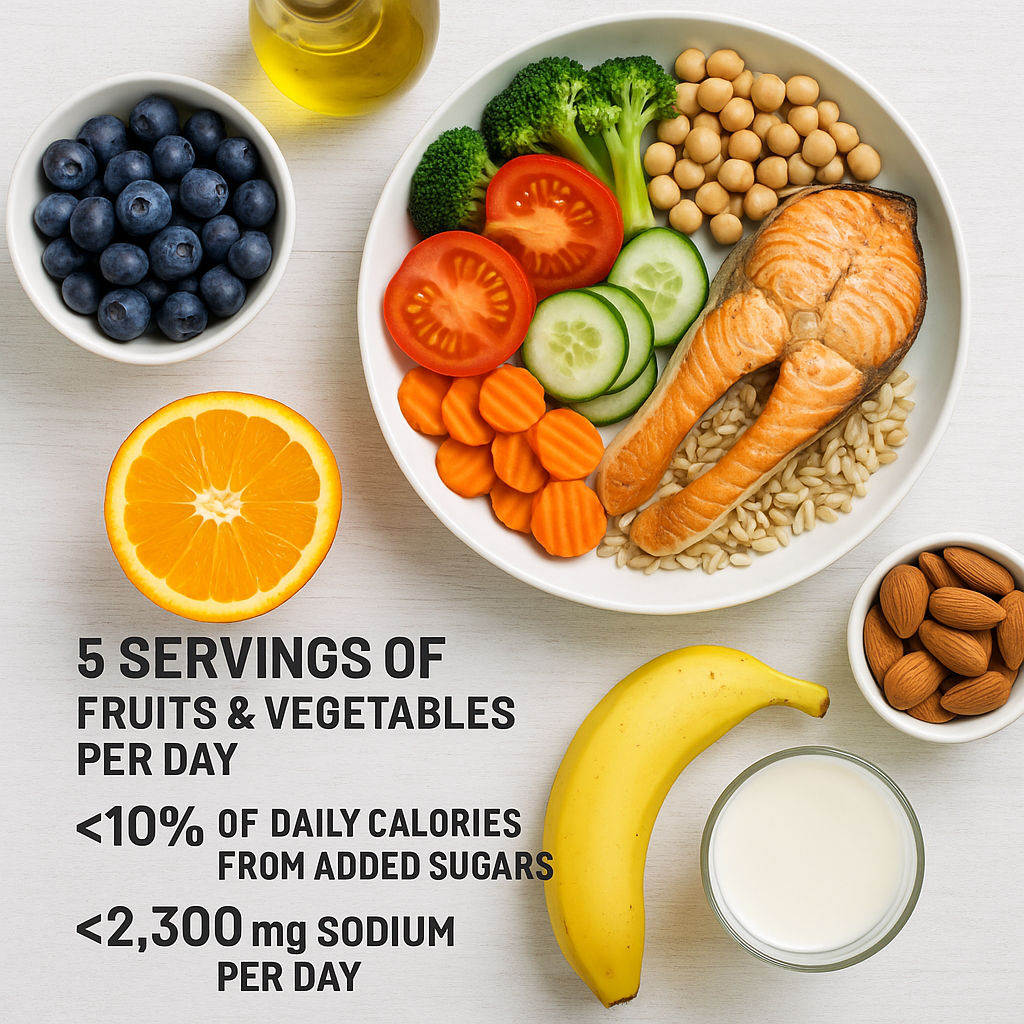
SEO Title How to Build a Healthy Eating Plan That Actually Works (U.S. & Europe Edition) Meta Description A practical science-based guide to healthy eating for American and European lifestyles. Learn the mechanisms, proven strategies, and habits that make a long-term healthy diet sustainable. — Why healthy eating is harder than it sounds Across the U.S. and Europe, people are surrounded by cheap calories, oversized portions, and hyper-processed foods. The problem isn’t a lack of food—it’s the quality and the overwhelming abundance of low-nutrient options. The Centers for Disease Control and Prevention (CDC) reports that only 1 in 10 U.S. adults consumes enough fruits and vegetables. In Europe, the European Food Safety Authority (EFSA) notes that refined grains and added sugars remain high in most diets. A 2023 Harvard-led cohort study following 105,000 adults for over 30 years showed that people who adhered to plant-forward patterns (Mediterranean, DASH, AHEI) increased their chances of “healthy aging” by 45%–124% (DOI:10.1038/s41591-025-03570-5). The challenge is real—but the mechanisms are clear: diets rich in whole foods support metabolic health, stabilize energy, reduce inflammation, and lower chronic-disease risk. — Step 1: Audit your diet (the honest version) People in the U.S. and Europe tend to underestimate sugar, salt, and portion sizes. Start with a 3-day audit: Write down everything you eat Include sauces, dressings, coffee add-ins Note packaged snacks, frozen meals, takeout habits Then compare with these benchmarks: 5 servings of fruits & vegetables per day (U.S. CDC, NHS UK code of practice) <10% of daily calories from added sugars (WHO global guideline) <2,300 mg sodium per day (USDA & American Heart Association; EU upper limit similar) At least half of grains as whole grains (USDA Dietary Guidelines) Most people fall short on produce and exceed sugar/sodium—so your audit becomes a personalized map of where to improve. — Step 2: Build your plate around Western-friendly healthy staples Instead of forcing unfamiliar foods, we use ingredients Americans and Europeans actually buy. What to add more of Vegetables: spinach, broccoli, tomatoes, carrots, zucchini Fruits: berries, apples, oranges, bananas (widely affordable across U.S./EU) Proteins U.S.: chicken breast, turkey, salmon, tuna, eggs, Greek yogurt Europe: cod, sardines, trout, legumes, kefir, chickpeas Healthy fats: olive oil (EU staple), avocado, nuts, seeds Whole grains: oats, brown rice, whole-wheat pasta, quinoa, barley, rye What to cut down Ultra-processed foods (chips, pastries, frozen pizza, fast-food combos) Sugary drinks (the largest sugar source in the U.S.—CDC report 2022) Processed meats (bacon, sausage, deli meats) High-salt sauces (BBQ, ranch, soy sauce, gravy packets) Sample meals that fit U.S. + Europe lifestyles Breakfast U.S.: Greek yogurt + berries + almonds Europe: whole-grain toast + eggs + tomatoes Lunch U.S.: grilled chicken bowl with rice, beans, and vegetables Europe: olive-oil tuna salad with mixed greens + whole-grain bread Dinner U.S.: baked salmon + broccoli + sweet potato Europe: chickpea stew + roasted vegetables + quinoa This isn’t a diet—it’s a structure. You can rotate ingredients within your region’s flavors. — Step 3: Make it sustainable (this is where people fail) In the U.S. and Europe, food environments are engineered for convenience. The trick is designing friction-less habits. Three science-backed habits 1. Buy pre-cut vegetables or frozen vegetables EFSA notes frozen vegetables retain nutrients nearly identical to fresh ones. 2. Follow the 50% plate rule Fill half the plate with vegetables; it naturally lowers calorie density. 3. Swap rather than restrict Coke → sparkling water + lemon White bread → whole-grain Heavy creamy pasta → tomato-based sauces Chips → nuts or fruit A 2022 PubMed meta-analysis (N=33 studies, DOI:10.1007/s00394-022-02864) found that habit-based interventions increase dietary adherence by 57%, proving that structure beats willpower. — Why this works for Western diets Uses common Western staples (chicken, salmon, oats, whole-grain bread) Aligns with U.S. USDA + EU EFSA guidelines Adaptable to office workers, students, parents, shift workers Cuts down ultra-processed foods, the top contributor to metabolic issues in U.S./EU Based on long-term epidemiological evidence rather than trends A 2021 EU Journal of Nutrition study (DOI:10.1007/s00394-021-02670) reported that replacing 20% of processed foods with whole-food options lowers all-cause mortality risk by 14%. Small shifts, large impact. — FAQ (People Also Ask Optimized) Is healthy eating cheap in the U.S. and Europe? It depends. Whole foods can be affordable if you choose seasonal produce, frozen vegetables, and budget-friendly proteins like eggs, beans, and lentils. The USDA lists beans as one of the most cost-effective protein sources. Do I need to follow Mediterranean or keto diets? No. Those diets work for some people, but the core principle is universal: more whole foods, fewer processed foods. You can borrow elements without fully adopting a “named diet”. What is the simplest change for American and European lifestyles? Switching beverages. Sugary drinks are the #1 contributor of added sugar in the U.S. and a major concern in Europe. Replacing them with water or unsweetened tea instantly improves metabolic markers. Can I eat carbs and still be healthy? Absolutely. Carbs like oats, whole-grain pasta, brown rice, and potatoes are nutrient-dense. What harms health is refined grains mixed with high sugar and high fat in ultra-processed foods.