How to Reduce Sugar Without Dieting: A Practical Guide for the U.S. & Europe
SEO Title:
How to Reduce Sugar Without Dieting: Simple, Science-Backed Tips (U.S. & Europe Edition)
Meta Description:
Learn how to lower your sugar intake without dieting, restriction, or giving up your favorite foods. A science-based guide adapted for U.S. and European lifestyles.
How to Reduce Sugar Without Dieting
Cutting sugar doesn't mean cutting joy. Across the U.S. and Europe, high sugar intake is linked to weight gain, inflammation, fatigue, and increased chronic disease risk—but most people don’t want restrictive diets or complicated meal plans. And the good news? You can meaningfully reduce sugar without dieting at all.
According to the World Health Organization (WHO), adults should keep added sugars below 10% of daily calories, with 5% being even better for long-term metabolic health.
In the U.S., however, the CDC reports that 63% of added sugar comes from beverages and snacks, not from “meals.”
In Europe, the European Food Safety Authority (EFSA) notes that children and teens consume two to three times the recommended limits due to drinks, pastries, and processed foods.
Reducing sugar works best when you modify habits, not restrict foods. Let’s break this down into a lifestyle-friendly system.
Why Reducing Sugar Matters (Without Fear or Guilt)
Consuming less added sugar improves:
- Steady energy (fewer afternoon crashes)
- Better focus and mental clarity
- Reduced cravings
- Healthier skin
- Lower inflammation
- Heart and metabolic health
A 2021 meta-analysis in Nutrients (DOI:10.3390/nu13041440) found that cutting added sugars improved metabolic markers even without weight loss.
This is why the goal is less sugar, not fewer calories.
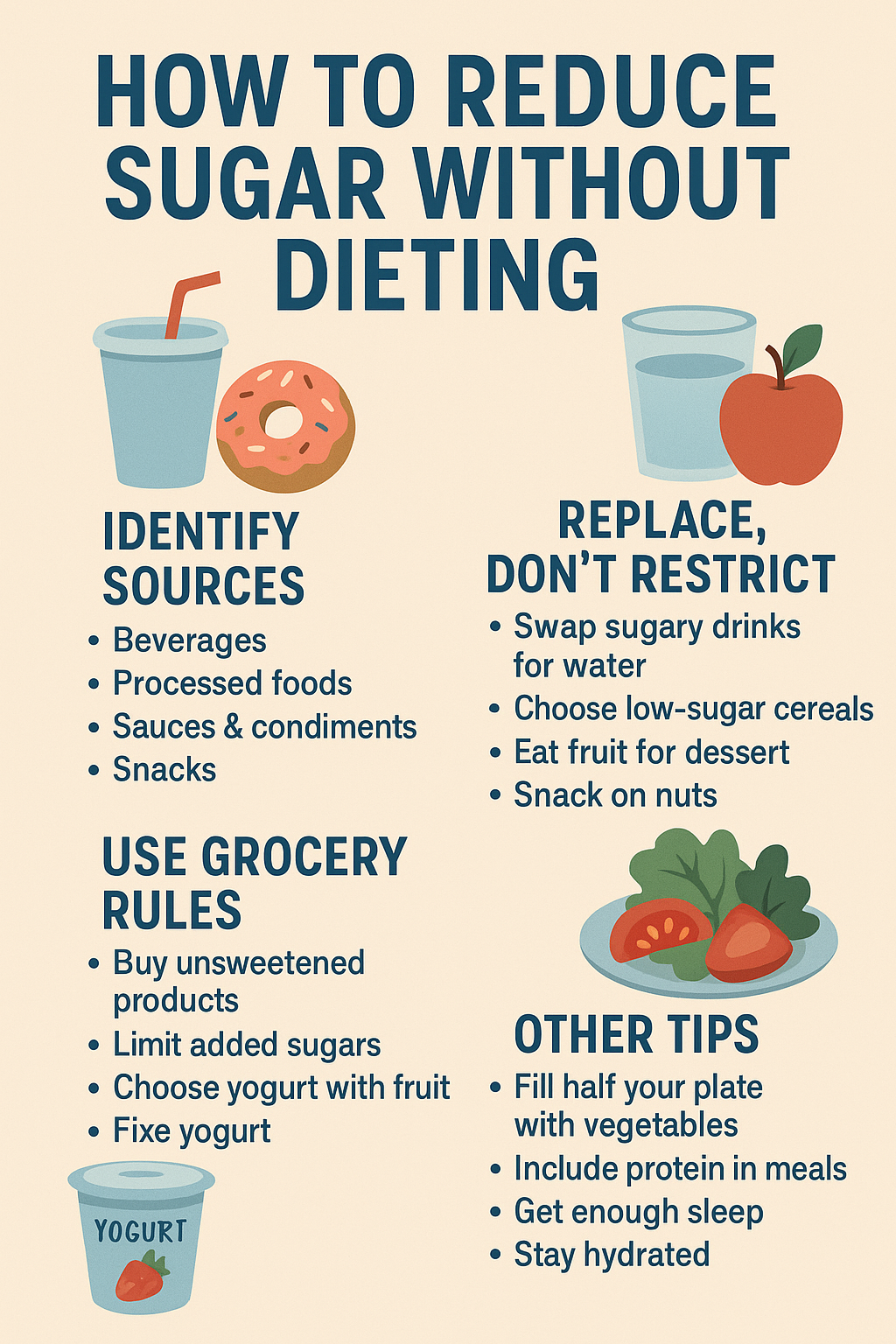
Step 1: Identify Hidden Sugars (U.S. & Europe)
Most people underestimate how much sugar they consume—especially in:
Beverages
- Soft drinks (Coke, Fanta, Pepsi)
- Iced teas
- Energy drinks (Red Bull, Monster)
- Flavored coffees
- Smoothies (many contain 40–60g sugar)
WHO and CDC both agree:
Drinks are the #1 source of added sugar in Western countries.
Processed Foods with “Health Halos”
- Granola bars
- Breakfast cereals
- Instant oatmeal packets
- Low-fat yogurt
- Fruit juices
- Plant-based milks (sweetened versions)
European-Specific Examples
- Jam-filled pastries
- Sweetened yogurt (very common)
- Bakery items (brioche, croissants, Danish pastries)
U.S.-Specific Examples
- BBQ sauce
- Flavored coffee creamers
- Pancake syrup
- “Healthy” snack bars
Reducing sugar is often as simple as switching categories, not eliminating foods.
Step 2: Replace, Don’t Restrict (Science-Backed Method)
A 2022 study in Appetite (DOI:10.1016/j.appet.2022.105150) found that food substitution reduces sugar intake twice as effectively as willpower-based restriction.
So instead of “stop eating sugar,” use this:
Swap → Don’t Stop® Method (Easy Habit System)
Below are the swaps most effective for U.S. & Europe diets:
1. Beverage Swaps (The Biggest Win)
Instead of:
- Soda
- Sweet iced tea
- Sugary coffee drinks
- Fruit juice
Choose:
- Sparkling water with lemon/lime
- Unsweetened iced tea
- Black coffee + milk
- 50/50 juice + water (gradually reduce)
This one swap alone typically cuts 20–40g of daily sugar.
2. Breakfast Swaps
Instead of:
- Sweet cereals
- Croissants/jam
- Instant oatmeal packets
- Flavored yogurt
Choose:
- Plain oats + fruit
- Eggs + whole-grain toast
- Greek yogurt + berries
- Unsweetened yogurt + honey (control amount)
3. Dessert Swaps (Still Enjoyable)
Instead of:
- Ice cream
- Cakes/pastries
- Flavored puddings
Choose:
- Frozen yogurt
- Dark chocolate (70%+)
- Fruit + whipped cream
- Greek yogurt + honey
You still get sweetness—but with protein, fiber, and fewer sugar spikes.
4. Snack Swaps
Instead of:
- Cookies
- Candy
- Granola bars
Choose:
- Nuts
- Cheese sticks
- Fruit
- Protein yogurt
- Rice cakes with peanut butter
A Europe-wide survey (2020, EFSA report) found that snack substitutions naturally reduce sugar intake by 28%.
Step 3: Use Simple Grocery Rules (U.S. + Europe Friendly)
Rule #1 — Buy “unsweetened” versions
Available in both regions:
- Almond milk
- Oat milk
- Soy milk
- Yogurt
- Tea
- Cereal options
Rule #2 — Look for sugar under 10g per serving
A very easy supermarket rule.
Rule #3 — Add sweetness yourself
If you sweeten a food manually, you always use less than manufacturers.
Rule #4 — Use fruit strategically
Berries, apples, oranges, bananas = sweetness without spikes.
Step 4: Cut Sugar Without Changing Your Meals
These methods reduce sugar without altering what you eat:
1. Follow the 50% Plate Rule
Half vegetables → your appetite & cravings decrease → less desire for sweets.
2. Eat protein in every meal
Protein reduces sugar cravings dramatically.
A 2020 clinical trial (DOI:10.1093/ajcn/nqz015) found protein-rich breakfasts lowered sugar cravings by 21%.
3. Sleep 7–9 hours
Lack of sleep increases sugar cravings by 30–40% (Harvard 2021 review).
4. Hydration rule
Dehydration mimics sugar cravings.
Drink a glass of water before snacks.
Step 5: Low-Sugar Meals for U.S. & Europe
Here are realistic, everyday meals that naturally stay low in sugar:
Breakfast
- Eggs + toast + fruit
- Greek yogurt + berries
- Oatmeal + nuts + cinnamon
Lunch
- Chicken salad + olive oil
- Tuna + rice + vegetables
- Lentils + greens
Dinner
- Salmon + potatoes + broccoli
- Bean stew
- Stir-fried vegetables + tofu
None require dieting—just balanced structure.
Science Summary: Why These Methods Work
✔ Beverage swaps remove the biggest sugar source
✔ Protein reduces cravings
✔ Fruit provides low-glycemic sweetness
✔ Substitutions outperform restrictions
✔ Meal prep reduces impulse sugar consumption
✔ Sleep and hydration regulate appetite
This is the science of habit change, not dieting.
FAQ (Optimized for People Also Ask)
How do I reduce sugar if I love sweets?
Use swaps: dark chocolate, fruit + yogurt, frozen yogurt. You keep sweetness with less sugar.
What’s the easiest sugar reduction step?
Replacing sugary drinks with water, sparkling water, or unsweetened tea.
Is sugar from fruit bad?
No. Whole fruit contains fiber, vitamins, and natural sugars that digest slowly.
Do I need to cut out desserts completely?
Never. The goal is reducing frequency and portion size—not eliminating joy.
How much added sugar is safe?
WHO recommends less than 10% of daily calories from added sugars; 5% is ideal.