How Ultra-Processed Foods Harm Heart Health (and What to Eat Instead)
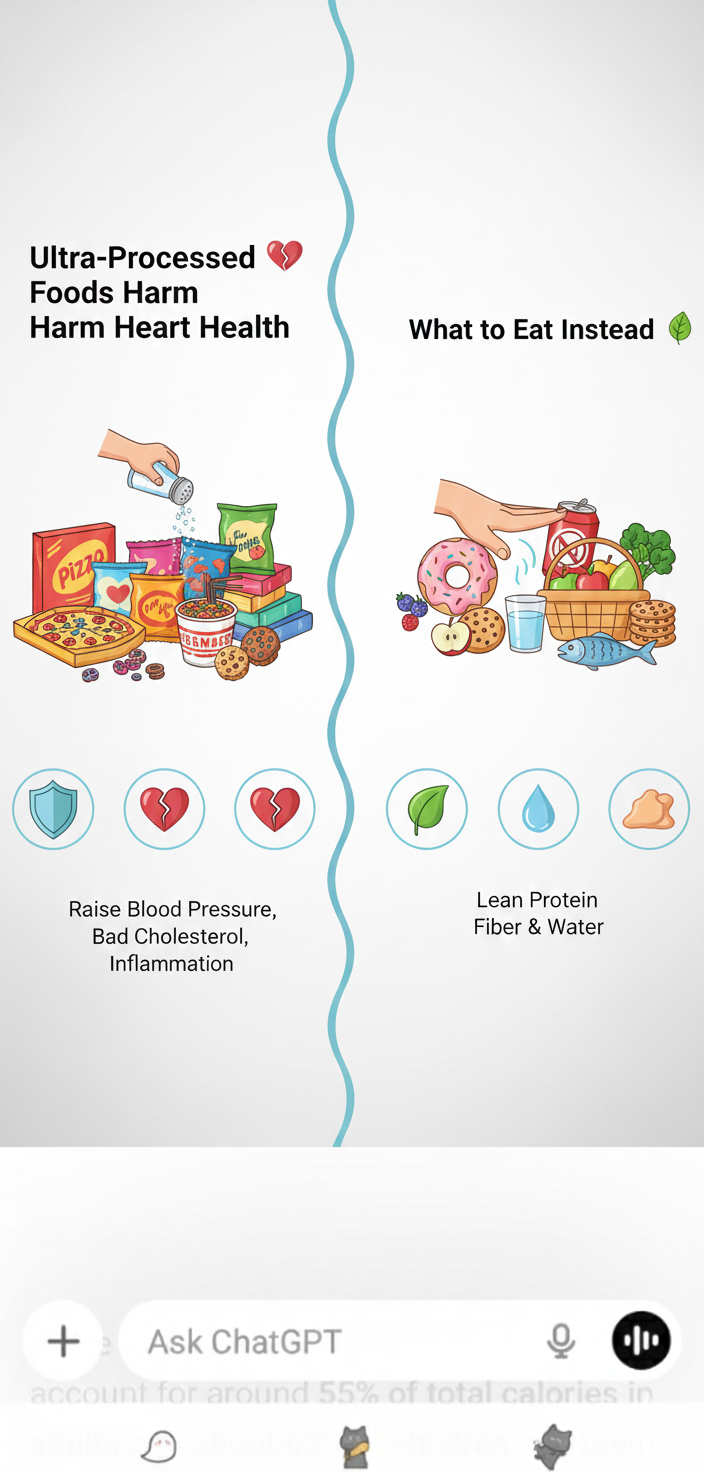
Frozen pizza, instant noodles, soft drinks, packaged snacks, “energy” bars — ultra-processed foods are so common that many people eat them at almost every meal. In the United States, ultra-processed foods account for around 55% of total calories in adults and about 62% in children and teens. Similar patterns appear in other high-income countries, where ultra-processed foods often provide half or more of daily energy intake. At the same time, a growing body of research links these foods to higher risks of obesity, type 2 diabetes, cancer, and especially cardiovascular disease (CVD). This guide explains: What “ultra-processed” actually means How these foods affect your heart and blood vessels How to recognize them quickly Practical ways to shift toward a less-processed, heart-protective pattern — What Are Ultra-Processed Foods? Most research uses the NOVA classification, which groups foods into four categories: 1. Unprocessed or minimally processed foods – vegetables, fruits, plain yogurt, eggs, fresh meat, whole grains. 2. Processed culinary ingredients – oils, butter, sugar, salt. 3. Processed foods – canned fish, cheese, simple bread, canned vegetables with added salt. 4. Ultra-processed foods (UPFs) – industrial products made mostly from refined ingredients, additives, and substances rarely used in home kitchens (modified starches, flavor enhancers, colorings, sweeteners, emulsifiers). Common examples of ultra-processed foods: Soft drinks, energy drinks, sweetened iced teas Packaged snacks and chips Sweetened breakfast cereals and cereal bars Instant noodles and many frozen ready meals Processed meats (hot dogs, chicken nuggets, many deli meats) Sweet bakery products, candies, and desserts UPFs are typically energy-dense, high in added sugar, unhealthy fats, and salt, and low in fiber and protective nutrients. — How Strong Is the Link Between Ultra-Processed Foods and Heart Disease? Evidence has moved quickly in the last few years. A meta-analysis of 22 prospective studies found that people in the highest category of ultra-processed food intake had 17% higher risk of overall CVD, 23% higher risk of coronary heart disease, and 9% higher risk of stroke compared with those in the lowest category. An Australian cohort that followed more than 39,000 adults for about 25 years found that those consuming the most ultra-processed foods had a 19% higher risk of dying from heart disease than those consuming the least. A large umbrella review in 2024 concluded that higher UPF intake is directly associated with dozens of adverse outcomes, including all-cause mortality, cardiovascular disease, and hypertension. While observational studies cannot prove cause and effect on their own, their findings are increasingly supported by controlled trials showing that UPF-heavy diets rapidly worsen cardiometabolic health, even when calories are matched. Taken together, the signal is clear: more ultra-processed food, higher heart risk. — How Ultra-Processed Foods Damage Heart Health Ultra-processed foods don’t harm the heart through a single pathway; they hit multiple systems at once. 1. They Pack Sugar, Refined Starch, and Unhealthy Fats UPFs often combine: Refined starches (white flour, modified starches) Added sugars (including high-fructose corn syrup) Industrial fats (palm oil, interesterified fats, sometimes trans fats) High levels of sodium This combo: Raises triglycerides and LDL (“bad”) cholesterol Promotes weight gain and central obesity Worsens insulin resistance and blood sugar control Raises blood pressure through excess sodium and altered kidney function Each of these changes independently increases cardiovascular risk; together they create a powerful push toward heart disease. — 2. They Displace Protective, Minimally Processed Foods Because ultra-processed foods are so convenient, cheap, and engineered to be hyper-palatable, they tend to crowd out: Vegetables and fruits Whole grains Beans and lentils Nuts and seeds Fish and minimally processed proteins That means: Less fiber (important for cholesterol, blood sugar, and gut health) Fewer antioxidants and anti-inflammatory compounds Lower intakes of potassium, magnesium, and other heart-supportive nutrients The problem isn’t only what UPFs add; it’s what they replace. — 3. They May Disrupt the Gut Microbiome and Inflammation Ultra-processed products frequently include: Emulsifiers Artificial sweeteners Colorings and preservatives Emerging research suggests that some of these additives may alter the gut microbiome, increase intestinal permeability (“leaky gut”), and promote chronic low-grade inflammation — all of which are linked to atherosclerosis and cardiometabolic disease. While mechanisms are still being clarified, the overall picture points toward UPFs nudging the body toward a more inflamed, metabolically stressed state. — 4. They Encourage Overeating UPFs are designed to be: Highly palatable Easy to chew and swallow quickly Low in fiber and protein relative to calories In controlled trials where people were allowed to eat as much as they wanted, participants consumed hundreds of extra calories per day on an ultra-processed diet compared with a minimally processed diet, despite similar menus and matched macronutrients. Calorie surplus over time → weight gain → higher blood pressure, triglycerides, insulin resistance, and CVD risk. — How to Recognize Ultra-Processed Foods Quickly You don’t need to memorize every NOVA rule. A few shortcuts catch most UPFs: The ingredient list is long, with several items you wouldn’t use in a home kitchen (maltodextrin, invert sugar, modified starches, carrageenan, artificial sweeteners, flavor enhancers). It’s a “ready to eat” product that requires little more than opening the package or microwaving. It’s aggressively marketed with health claims (“high protein,” “low fat,” “zero sugar”) while still being heavily packaged and flavored. It rarely resembles any whole food in nature. If it comes in a crinkly wrapper and tastes like a science experiment designed to be irresistible, it’s probably ultra-processed. — A Heart-Healthier Strategy: “Shift, Don’t Perfect” You don’t need to eliminate every packaged item to protect your heart. The main goal is to reduce the proportion of calories from ultra-processed foods and increase the share from minimally processed ones. 1. Start with the Big Sources CDC data show that, for U.S. adults, the top ultra-processed calorie sources include sandwiches made with processed bread and meats, sweet bakery products, sweetened beverages, and snacks. Pick one or two of these in your own routine and redesign them: Replace sugary drinks with water, sparkling water, or unsweetened tea. Swap sweet pastries at breakfast for oats, fruit, and nuts. Use whole-grain bread and less-processed fillings (eggs, hummus, tuna, leftover chicken) instead of processed meats. — 2. Apply the “Upgrade One Level” Rule When a food is ultra-processed, ask: what is one step less processed version of this? Examples: Instant noodles → whole-grain pasta with olive oil, garlic, and frozen vegetables Chicken nuggets → baked chicken thighs or drumsticks with herbs Flavored yogurt dessert → plain yogurt with fruit and a drizzle of honey Packaged cookies → a piece of dark chocolate with nuts and fruit You’re not going from UPF to perfect; you’re going from UPF to better. — 3. Build Your Plate Around “Four Pillars” Try to center most meals on: 1. Vegetables and/or fruit 2. Whole grains or starchy vegetables (brown rice, oats, quinoa, potatoes with skin) 3. Protein (beans, lentils, fish, eggs, poultry, tofu) 4. Healthy fats (olive oil, nuts, seeds, avocado) This structure automatically pushes ultra-processed foods to the edges. — 4. Keep Some Convenience — Just Choose Wisely Not all convenience foods are ultra-processed. Helpful options include: Frozen vegetables and fruits with no added sauce or sugar Canned beans (rinsed) Plain canned fish (tuna, salmon, sardines) Simple whole-grain breads or crackers with short ingredient lists These can save time while keeping your UPF intake lower. — FAQ: Ultra-Processed Foods and Heart Health 1. Are all packaged foods bad for my heart? No. Packaging alone doesn’t make a food ultra-processed. The key is what’s inside: ingredient quality, additives, and how far it is from whole food. A bag of frozen peas is very different from a frozen pizza. 2. Can I ever eat ultra-processed foods again? Yes. The evidence points to dose and frequency. Occasional UPFs in a generally minimally processed, plant-forward diet are unlikely to be a major problem. The goal is to avoid a pattern where most of your calories come from UPFs every day. 3. Are plant-based meat alternatives ultra-processed? Many are, especially when they contain long ingredient lists with isolates, concentrates, and multiple additives. They can still be useful as a transition food away from red and processed meat but shouldn’t be your main protein source long term. 4. If I exercise a lot, does UPF still matter? Regular activity is protective, but it doesn’t fully cancel the effects of a high-UPF diet on blood pressure, lipids, inflammation, and gut health. Combining movement with a less-processed pattern gives the strongest heart protection. 5. What’s a realistic first step this week? For most people, the best starting move is: cut sugary drinks and reduce fast food or ready meals to once or twice per week, replacing them with simple, home-assembled meals based on whole ingredients. — Final Thoughts Ultra-processed foods have quietly taken over much of the modern diet — and the data now show a consistent pattern: the more you rely on them, the higher your long-term risk of heart disease and other chronic conditions. You don’t need perfection or a nostalgic, pre-industrial lifestyle. By: Drinking mostly water and unsweetened beverages Building meals around vegetables, whole grains, beans, nuts, seeds, and less-processed proteins Treating ultra-processed snacks and ready meals as occasional, not default you shift your daily pattern toward one that supports healthier arteries, steadier metabolism, and a heart that ages more slowly.