Why Eating Breakfast at the Same Time Every Day Helps Stabilize Your Hormones (Backed by Science)
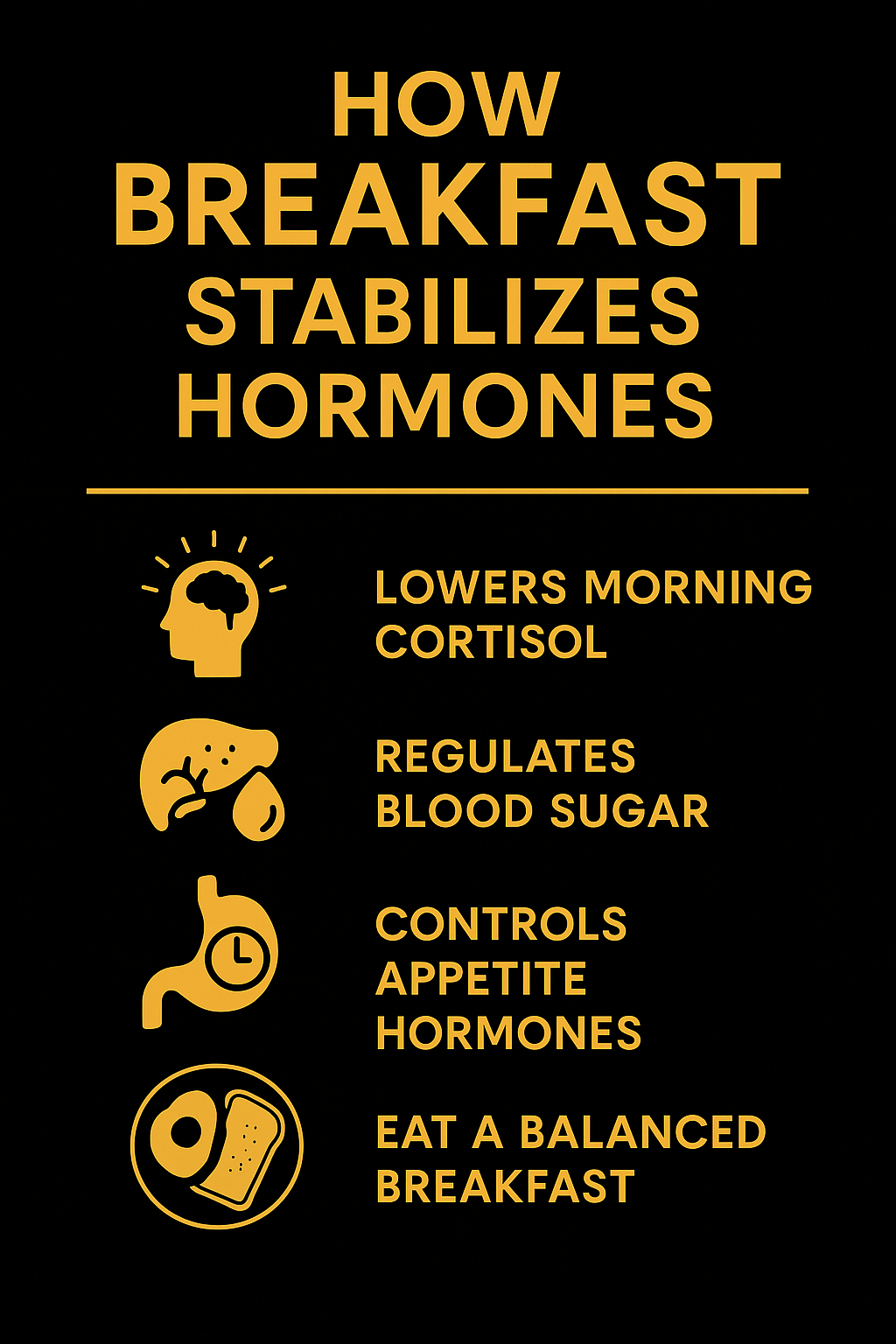
Breakfast isn’t just a meal — it’s a hormonal reset button. Most people think breakfast is simply about energy. Science shows something deeper is happening: your circadian rhythm (the body’s internal 24-hour clock) uses your first meal of the day as a signal to balance hormones that regulate metabolism, stress, hunger, and fat storage. When the body receives food at a predictable time each morning, three major hormonal systems become more stable: — 1. Cortisol: Your Morning Stress Hormone Calms Down Faster Cortisol naturally peaks in the early morning to help you wake up. If you delay or skip breakfast, cortisol stays elevated longer—leading to: brain fog irritability increased abdominal fat storage unstable energy levels Eating breakfast at the same time daily tells your system “you’re safe”, allowing cortisol to drop smoothly and reducing chronic stress signals. — 2. Insulin & Blood Sugar: Your Metabolism Wakes Up Properly When breakfast timing is consistent, your pancreas learns the pattern and regulates insulin more efficiently. This results in: fewer blood sugar spikes reduced cravings in the afternoon steadier focus better long-term metabolic health Irregular morning eating habits, on the other hand, confuse the system and make the body “guess” when to produce insulin — increasing the risk of metabolic slowdown. — 3. Ghrelin & Leptin: Hunger Hormones Become Predictable Ghrelin = hunger signal Leptin = fullness signal These hormones operate on a clock. If breakfast timing changes daily, the hormones become chaotic — which explains why you may feel: randomly hungry full at the wrong time craving sugar even after eating Consistent breakfast timing programs your appetite system so you feel hungry when you should, and satisfied when you should. — What Time Should You Eat Breakfast? Research suggests the ideal window is within 1–2 hours of waking. Most people do well between: 7:00–9:00 A.M. More important than the exact hour is consistency — your body likes predictability. — What to Eat: A Balanced “Hormone-Friendly” Breakfast Choose foods that steady your blood sugar and support hormone production: protein (eggs, Greek yogurt, tofu, cottage cheese) healthy fats (avocado, nuts, olive oil) fiber (berries, oats, vegetables) Avoid: sugary pastries breakfast drinks with added sugar empty-carb snacks These spike insulin and disrupt the very hormones you're trying to stabilize. — A Simple Template You Can Follow Daily Use this ratio: Protein 25–35g + Healthy Fat + Fiber + Slow Carbs Example: 2 eggs + avocado + whole-grain toast Greek yogurt + chia seeds + berries Tofu scramble + veggies Your breakfast doesn’t need to be fancy — it needs to be consistent. — Final Takeaway If your energy swings, hunger is unpredictable, or metabolism feels sluggish, the issue may not be what you eat… but when you eat. Eating breakfast at the same time every morning: regulates stress hormones stabilizes metabolism reduces cravings supports long-term weight control aligns your body with its natural circadian rhythm A consistent morning meal is one of the simplest, science-backed habits to improve your health — without dieting or supplements.