Your Teeth Aren’t Yellow — They’re Losing Surface Density
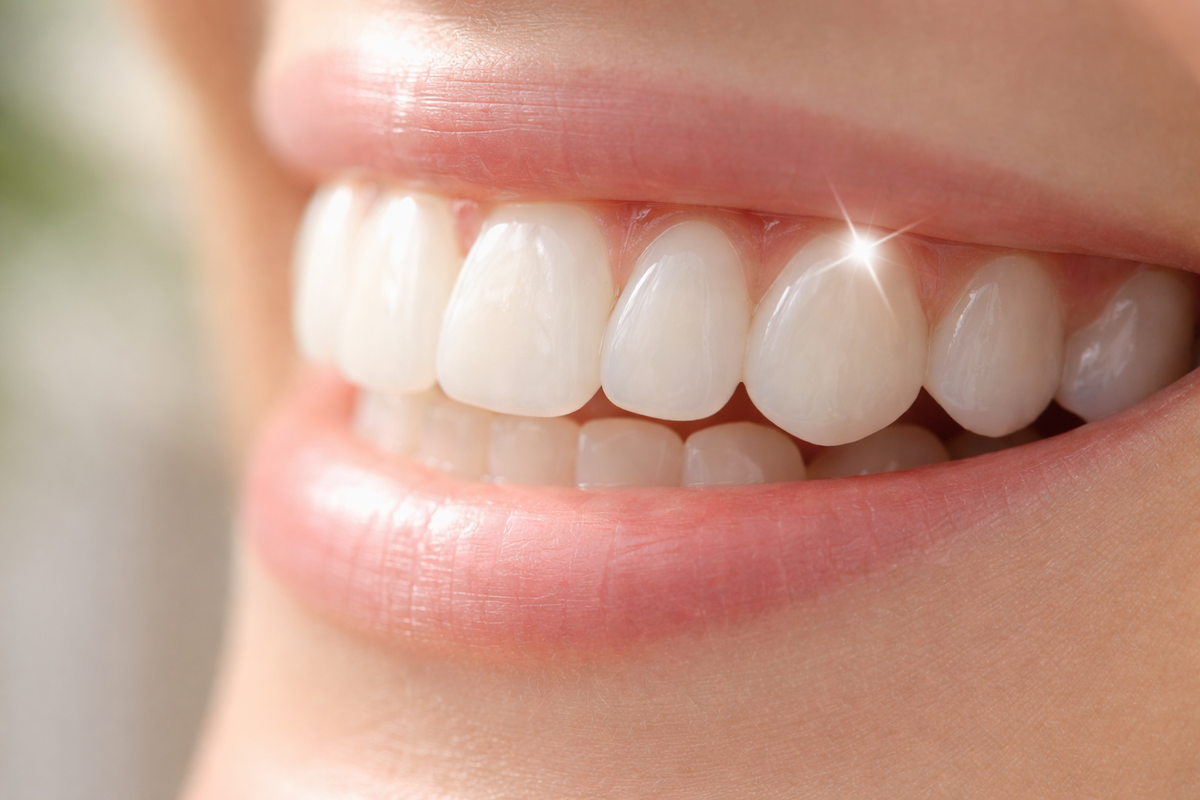
You brush twice a day.
You don’t constantly drink soda.
You even tried whitening toothpaste.
Yet in natural light, your teeth still look slightly dull.
Not heavily stained. Just muted.
If that sounds familiar, this usually isn’t about surface color.
It’s about enamel structure.
And structure determines light reflection.
When Whitening Stops Changing Anything
Whitening systems work by oxidizing pigments attached to enamel. This breaks apart stain molecules and can lighten visible discoloration.
That works for chromogenic staining.
But oxidation does not rebuild enamel.
Enamel is primarily composed of hydroxyapatite — a crystalline calcium phosphate matrix. When exposed repeatedly to acidic foods, beverages, or frequent snacking, enamel begins to soften at a microscopic level.
This doesn’t always look dramatic.
But it changes how light interacts with the surface.
Rougher enamel scatters light.
Scattered light appears dull.
So someone can bleach repeatedly and still feel something is missing.
Because the issue isn’t pigment.
It’s density.
Demineralization Happens Quietly
Enamel begins to demineralize when oral pH drops below roughly 5.5.
Coffee, citrus, soda, and even some healthy drinks temporarily lower oral pH. If exposure is frequent, enamel may not fully re-harden between acid cycles.
Over time this can lead to:
• Increased sensitivity
• Slight translucency
• Reduced surface gloss
• Greater stain retention
None of these are dramatic. But together, they reduce reflectivity.
Which is why stronger whitening often produces diminishing returns.
What Remineralization Actually Does
Remineralization is the process of restoring minerals — primarily calcium and phosphate — back into weakened enamel zones.
Saliva performs this function naturally. But modern dietary patterns and low hydration can reduce its effectiveness.
Supporting remineralization involves:
• Maintaining neutral oral pH
• Avoiding brushing during acid-softened periods
• Reducing abrasive pressure
• Supporting mineral redeposition
This is where mineral-based powders enter the discussion.
Instead of focusing on bleaching agents, they emphasize surface refinement and pH balance.
For example, formulations like Viva Doria Natural Tooth Powder are often referenced in enamel-support routines because they prioritize mineral-based polishing over peroxide-driven whitening.
Notice the distinction:
Maintenance, not transformation.
Why pH Balance Matters More Than “Whitening Strength”
After acidic exposure, enamel remains softened for a short period. Brushing aggressively during this window increases wear.
A structural strategy looks different:
• Wait 30–60 minutes after acidic meals before brushing
• Stay hydrated to support saliva production
• Use gentle polishing techniques
• Avoid constant acidic sipping
In that context, an alkalizing mineral format like Viva Doria Natural Tooth Powder fits as a supportive tool within a broader oral care framework rather than a fast cosmetic fix.
The goal is structural stability.
And structural stability determines long-term brightness.
Light Physics and Tooth Appearance
Brightness is about reflection.
Smooth surfaces reflect light evenly.
Microscopically rough surfaces scatter it.
Even without heavy staining, enamel texture changes can reduce clarity.
Refining the surface — rather than bleaching it — may improve visual brightness more sustainably.
Think polished stone versus rough stone.
You’re not repainting the surface.
You’re refining it.
What Remineralization Cannot Do
Let’s be clear.
Mineral-supportive products do not:
• Regrow lost enamel
• Reverse deep cavities
• Replace dental treatment
• Instantly change shade levels
They may:
• Improve surface smoothness
• Support pH balance
• Reduce early sensitivity
• Maintain enamel integrity
Authority comes from stating limits.
Who Might Benefit From a Structural Approach
This framework may be relevant for:
• Frequent coffee drinkers
• Individuals experiencing mild enamel sensitivity
• Those avoiding peroxide systems
• People concerned about long-term enamel erosion
If enamel loss is advanced, professional dental care is essential.
No over-the-counter product replaces clinical evaluation.
The Long-Term Perspective
Marketing focuses on speed.
Biology rewards consistency.
A slightly off-white but structurally intact enamel surface is healthier than a bleached but weakened one.
If your teeth look dull despite consistent brushing, the issue may not be staining.
It may be surface density.
Shifting from “How white can I get?” to “How stable is my enamel?” often produces more sustainable results.
And enamel stability is what protects brightness long term.